Blog / Twine & mulch film
Twine & mulch filmHow to choose the right agricultural twine and mulch film for your crop
Not all agricultural twine or plastic mulch film is the same, even if it looks that way at first glance. Choosing the right material for your crop and climate is the difference between a product that lasts the whole season and one you have to replace halfway through. Here's what to check before you buy.
When choosing agricultural twine
- Tensile strength: it needs to hold the weight of a fruit-loaded plant and resist wind stress without snapping.
- UV protection: twine exposed to sun for the whole cycle breaks down without the right additives; twine with good UV protection won't turn brittle mid-season.
- Gauge (thickness): thicker means stronger, but also more costly — the right gauge depends on how heavy your crop is, not simply "thicker is always better."
- Material: most agricultural twine is polypropylene, a lightweight, strong material; make sure it's virgin material rather than recycled, since that directly affects strength.
When choosing plastic mulch film
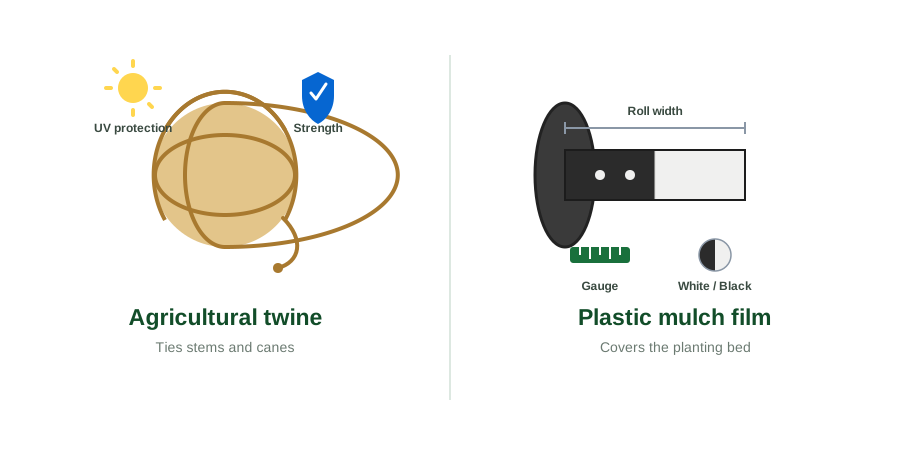
This is where the roll's label gives you the key information. As shown in this article's diagram, there are several details to check: color, gauge (in microns), roll width, and whether it comes perforated or plain.
- Color: white mulch film reflects light and keeps the soil cooler — ideal for hot climates or summer cycles. Black film absorbs heat and warms the soil, useful in colder cycles or to speed up early crop development. There are also white/black versions that combine both effects depending on which side faces up.
- Gauge (microns): determines how resistant the plastic is to tearing and how long it lasts under sun exposure and mechanical handling.
- Perforated or plain: perforated mulch film already has holes ready for transplanting or drip irrigation; plain film is perforated on-site according to your planting pattern.
- Roll width: should match your planting bed width to avoid wasting material.
Checking the batch and production code is also useful — it lets you track down an issue if a roll has a problem, and makes it easier to reorder the exact same material later.
The short version
Before buying on your own, tell us about your crop, your cycle and your climate — with that information, we can recommend the twine and mulch film combination that actually fits your farm, instead of guessing.
Want help choosing the right material for your next planting?
Ask for advice on WhatsApp