
Blog / Trellising
TrellisingWhat is trellising, and why does your berry crop need it?
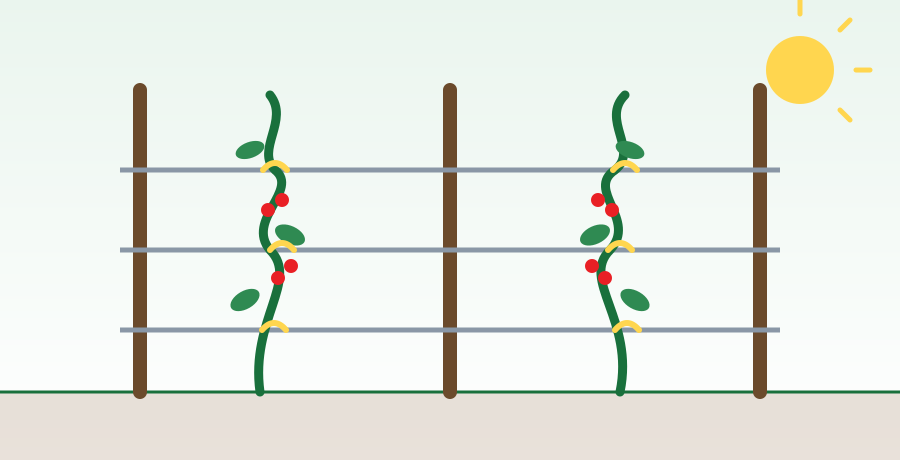
Trellising is the support system that keeps your crop's stems and canes lifted off the ground, usually with the help of posts, wire and agricultural twine. In berry crops — blackberry, raspberry, and in several systems strawberry as well — it's far from a minor detail: it's one of the practices with the biggest impact on final fruit quality.
Why does it matter so much in berries?
Raspberry and blackberry canes grow long and carry heavy fruit. Without proper trellising, they bend, tangle with each other, and end up touching the ground. That creates several problems you can avoid with a well-planned structure:
- Less fruit touching the soil, which reduces rot and moisture damage.
- Better airflow between plants, which helps prevent fungal disease.
- More sun exposure across the whole plant, not just the top, improving fruit color and size.
- Faster, safer harvest for your crew, with fruit at an accessible, orderly height.
- Less wind damage, especially on canes loaded with fruit.
The most common trellising systems
The most widely used system for raspberry and blackberry is trellis staking, shown in the diagram above: fixed posts along the row, connected by wires at different heights, where canes are tied off as they grow. In strawberry, some systems use simpler supports, especially in tall-growing varieties or high-tunnel production.
In either case, the material you use to tie the plant to the structure matters just as much as the structure itself — that's where agricultural twine comes in.
The role of agricultural twine
Twine is the most common material for tying stems to wire or posts, because it combines strength, low cost and easy handling in the field. Low-quality twine snaps under the weight of the fruit or breaks down too quickly in the sun, forcing you to re-tie mid-season. Twine with the right strength and UV protection holds up for the entire cycle without failing.
In the next blog post, we cover how to choose the right twine and mulch film for your crop and climate.
Ready to set up or refresh your trellising system for this season?
Get a quote on WhatsApp